
Review articles
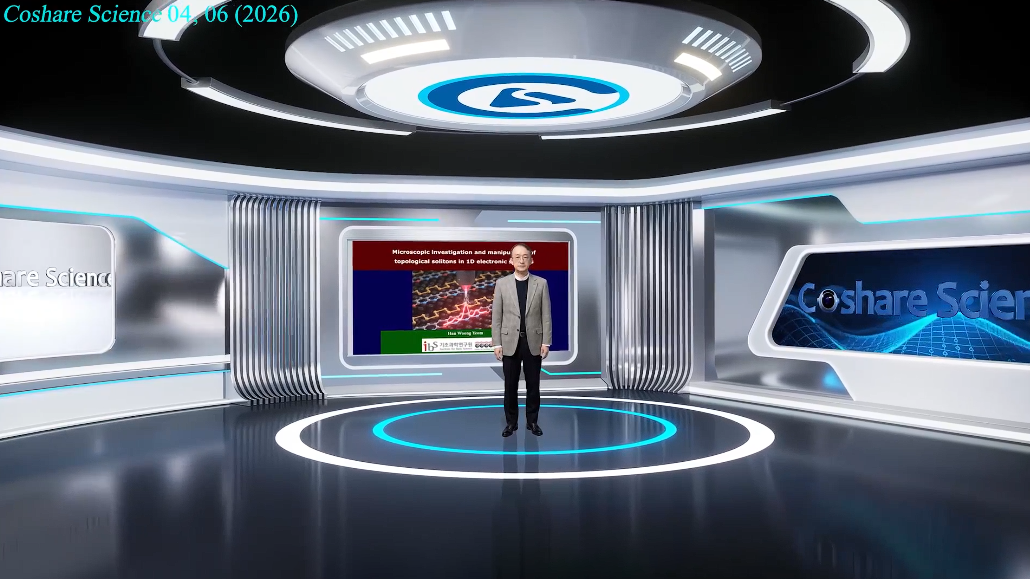

Microscopic investigation and manipulation of topological solitons in 1D electronic systems
We witness that silicon device technology, the foundation of current information civilization, is close to its end with the limit of device miniaturization and the explosive growth of energy consumption in processing information. While post-Si device architectures such as TMDC devices are under active development, technological and fundamental breakthroughs are required for devices consuming much less energy. From the physics point of view, it is a challenge to find quasi-particles and their device platforms that can carry information at higher density and without energy dissipation. While there are a few candidates such as photons, Cooper pairs, various quantum Hall currents, spin currents, and excitons, we have proposed topological solitons in 1D and 2D materials as one new direction. In 2013–2017, we made it possible to microscopically observe individual topological solitons in 1D materials for the first time since their discovery in 1979. Until 2022, we developed this research to secure model 1D systems for a few different types of microscopically accessible solitons and to track their motions. Our recent work demonstrates the manipulation of solitons and their interactions, which may open a way toward soliton technology in electronic systems. On the other hand, these works open a research field where one can study the structures, electronic states, kinetics, dynamics, and interactions of individual solitons. At the end of the video article, we show that the soliton concepts are helpful in understanding the physics of topological domain walls in complex 2D quantum materials.
The grand mirror of isotope anomalies
The existence of a pO₂ threshold that switched off one photochemical reaction, i.e., deep UV SO₂ photolysis in the troposphere, and switched on another photochemical reaction, i.e., the CO₂–O₂–O₃ reaction network in the stratosphere, has resulted in a grand mirror of isotope anomalies over the 4.6 Ga Earth history. The rock record reveals this grand pattern.
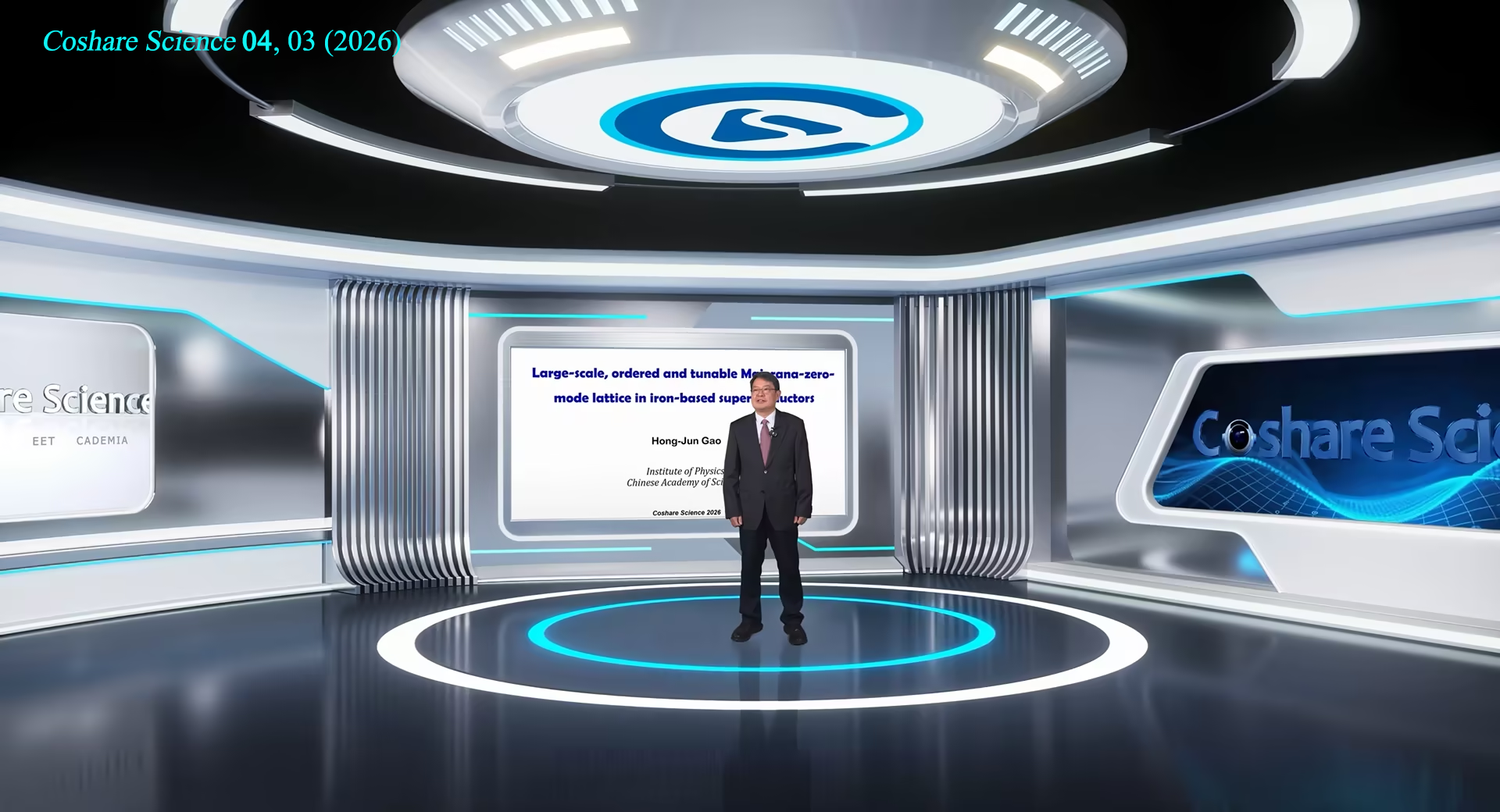
Large-scale, ordered and tunable Majorana-zero-mode lattice in iron-based superconductors
Majorana zero modes (MZMs) are spatially-localized zero-energy fractional quasiparticles with non-Abelian braiding statistics. They are believed to hold great promise for topological quantum computing. By using low-temperature and strong-magnetic-field scanning tunneling microscopy/spectroscopy, a breakthrough of Majorana zero mode has been firstly achieved in a single material platform of high-Tc iron-based superconductor, FeTe0.55Se0.45. The mechanism of two distinct classes of vortices presented in this system was revealed, which directly tied with the presence or absence of zero-bias peak. We further found the Majorana conductance plateau in vortices. Both the extrinsic instrumental convoluted broadening and the intrinsic quasiparticle poisoning can reduce the conductance plateau value, and when extrinsic instrumental broadening is removed by deconvolution, the plateau nearly reaches a 2e2/h quantized value. Moreover, we confirmed the existence of MZMs in the vortex cores of CaKFe4As4 and LiFeAs. Based on these works mentioned above, most recently, we have successfully achieved the large-scale, highly-ordered and tunable MZM lattice in strained LiFeAs. Notably, more than 90% of the vortices are topological and possess the characteristics of isolated MZMs at the vortex center, forming ordered MZM lattice with the density and the geometry tunable by external magnetic field. With decreasing the spacing of neighboring vortices, the MZMs start to couple with each other. Our results show a great potential of MZMs in the application of topological quantum computations in the future.
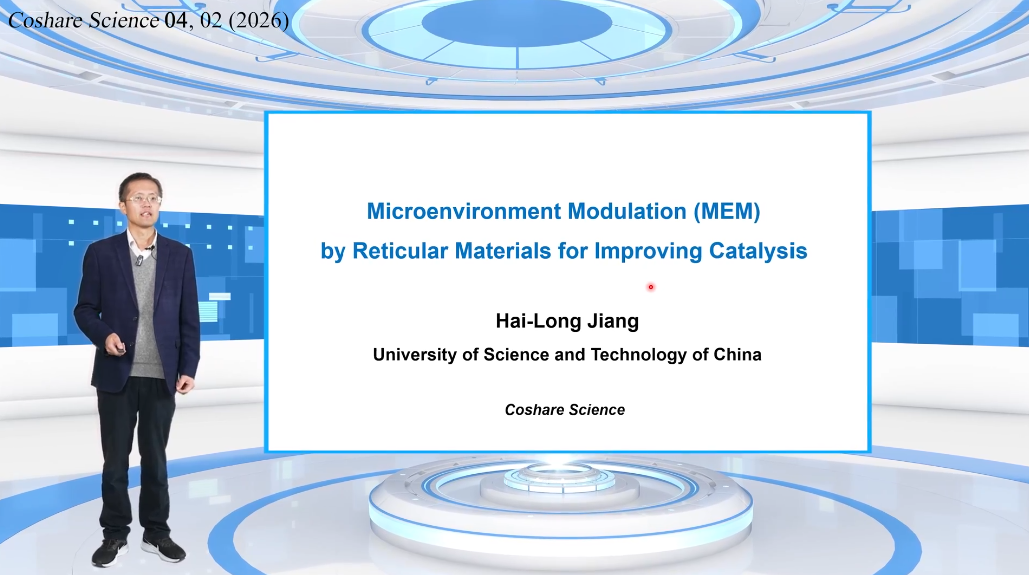
Microenvironment modulation (MEM) by reticular materials for improved catalysis
Catalyst design and optimization are central to advancing catalytic science. In both enzymatic and homogeneous systems, the microenvironment that creates distinct spatial and electronic configurations around active sites showcases profound influence on catalytic behavior. However, elucidating microenvironment modulation (MEM) in heterogeneous catalysts remains a significant challenge, primarily due to the structural rigidity and limited tailorability of conventional solid materials. Reticular materials, including metal–organic frameworks (MOFs) and covalent organic frameworks (COFs), have recently emerged as prominent candidates for heterogeneous catalysis. Their atomic-level structural precision and high degree of tunability render them ideal model systems for MEM around catalytic sites. As such, MOFs and COFs offer unique opportunities to unravel the role of MEM in governing catalytic performance. In this presentation, I will highlight our recent progress in leveraging MEM surrounding catalytic sites based on reticular materials for improving catalysis.
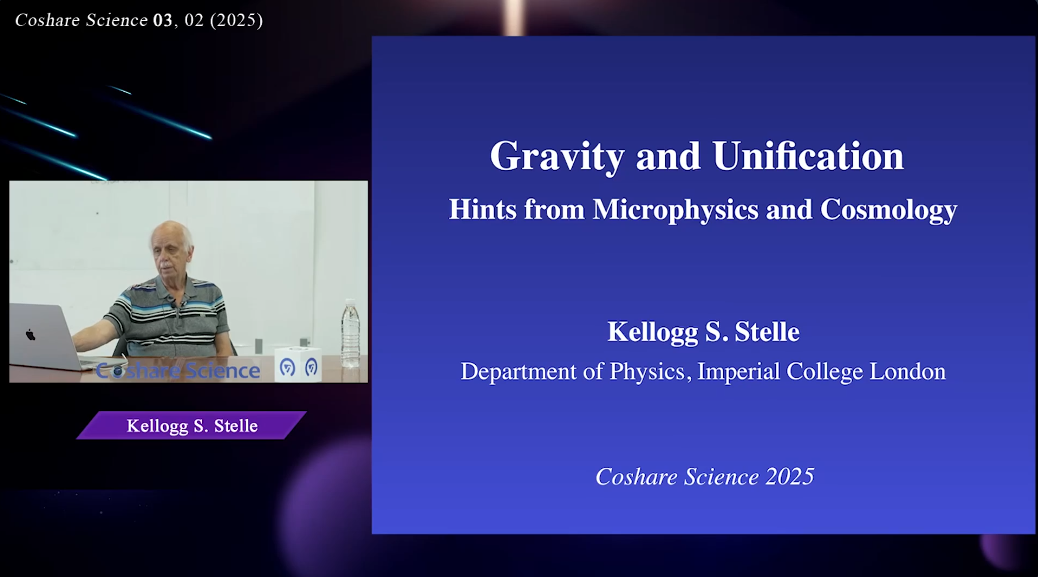
Gravity and unification: hints from microphysics and cosmology
Elementary Particle Physics and General Relativity relate respectively to the very small and the very large. But they are both essential in trying to understand the structure of the universe, especially at the very first instants. Some of the key ideas involved in this juncture of the very small and the very large are illustrated.
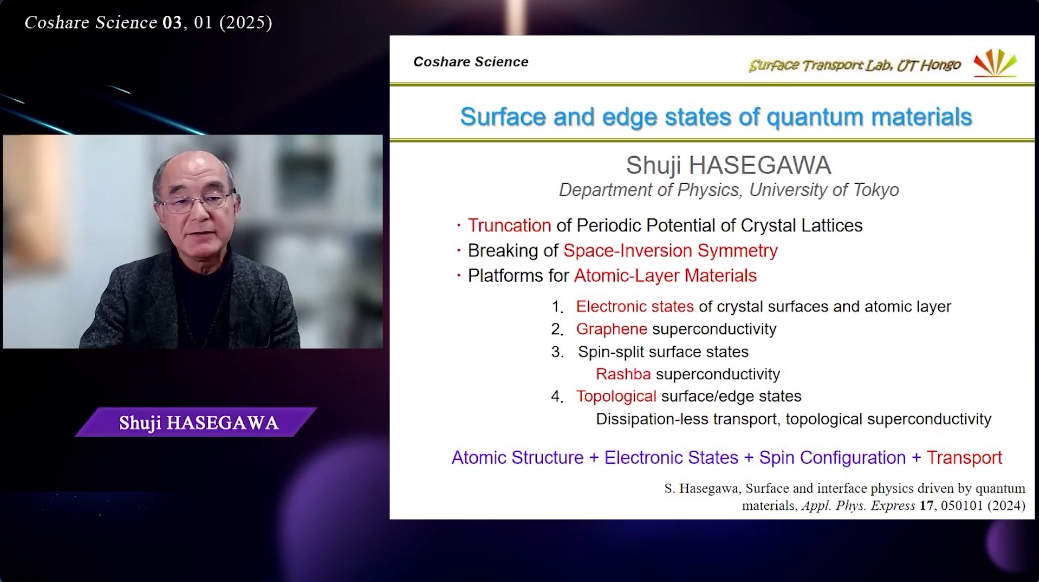
Surface and edge states of quantum materials
Electronic states at surfaces, interfaces, and edges of materials emerge due to different reasons and have their own characters, which are expected to be useful for intriguing physics and possible applications to electronic/spintronics devices. Especially emerging quantum materials, such as graphene and similar monatomic-layer materials, van der Waals two-dimensional crystals, and topological insulators, show prominent features in the surface/edge states. Such states at the boundaries are different from those inside the three- or two-dimensional crystals, because of the truncation of crystal lattice periodicity, space-inversion-symmetry breaking, and difference in topology in band structures across the boundaries. Such quantum materials are expected to be key ingredients for energy-saving/-harvesting technology as well as quantum computation/information technology. This is based on exotic phenomena at the states, such as spin–momentum locking of electrons, dissipation-less charge/spin currents, nonreciprocal current, and possible Majorana fermions. In this presentation, the fundamental concepts of such surface/edge states are introduced from the viewpoint of surface physics. Especially charge and spin-related transport properties are discussed based on controls of the atomic and electronic structures of materials by using state-of-the-art techniques.
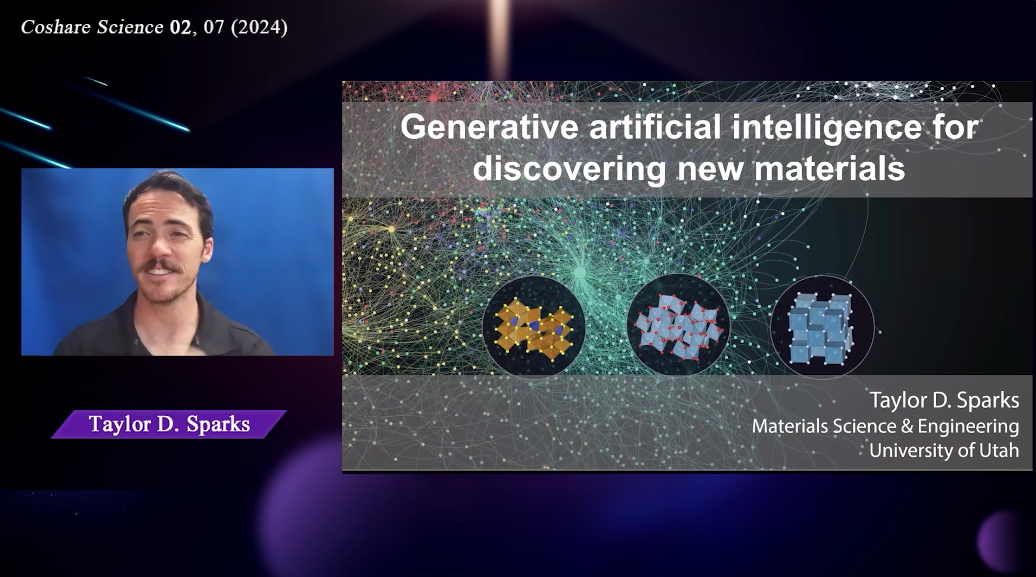
Generative artificial intelligence for discovering new materials
Crystal structure prediction has long fascinated scientists. There has been intense investigation over the last century ranging from simplistic rules to data-driven predictions and, most recently, generative artificial intelligence tools developed by academics and now deployed at scale by private companies like DeepMind. The author describes the timeline of crystal structure prediction and how machine learning has supplemented and, in some cases, replaced traditional approaches. The video article compares generative models including variational autoencoders, generative adversarial networks, and diffusion models and describes new efforts to condition these models to achieve inverse design of new crystal structures. Specific examples of xtal2png and CrysTens representations were given.
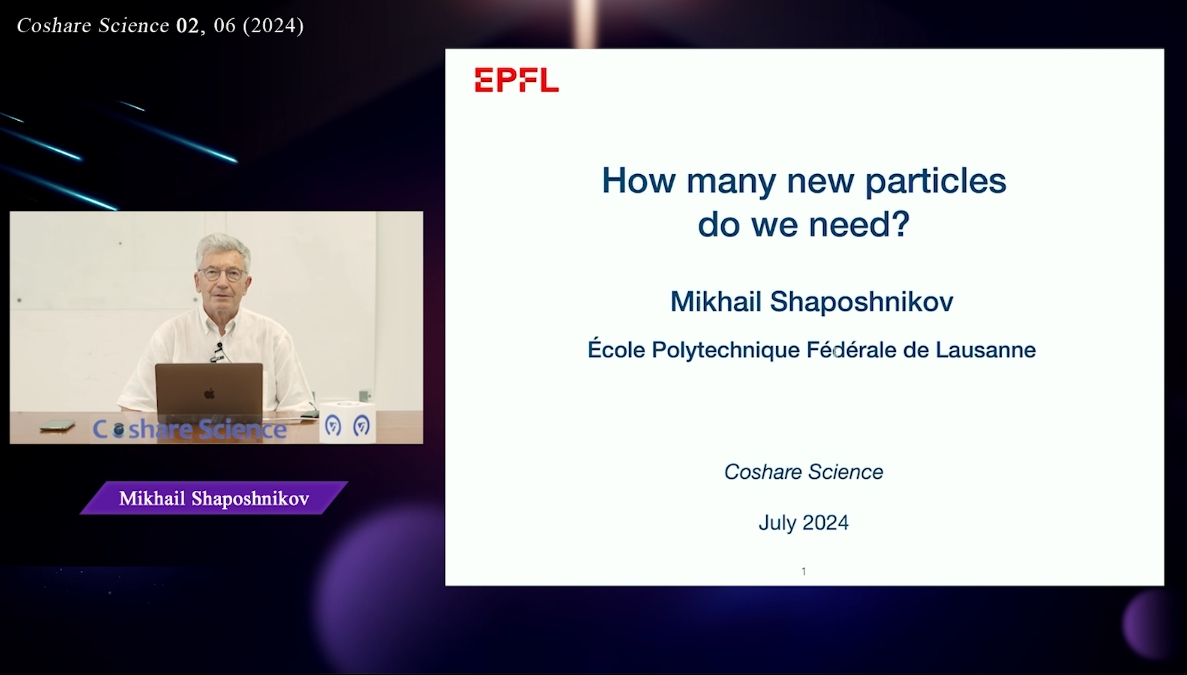
How many new particles do we need?
The Standard Model of particle physics (SM) and Einstein general relativity are extremely successful in describing almost all phenomena observed in Nature so far, spanning distances from a fraction of Fermi to thousands of megaparsec (Mpc). In this review article, the author deliberates on the question formulated in the title, given that the SM does not allow neutrino oscillations, does not have a candidate for dark matter in the Universe, and does not explain the observed cosmological dominance of matter over antimatter.
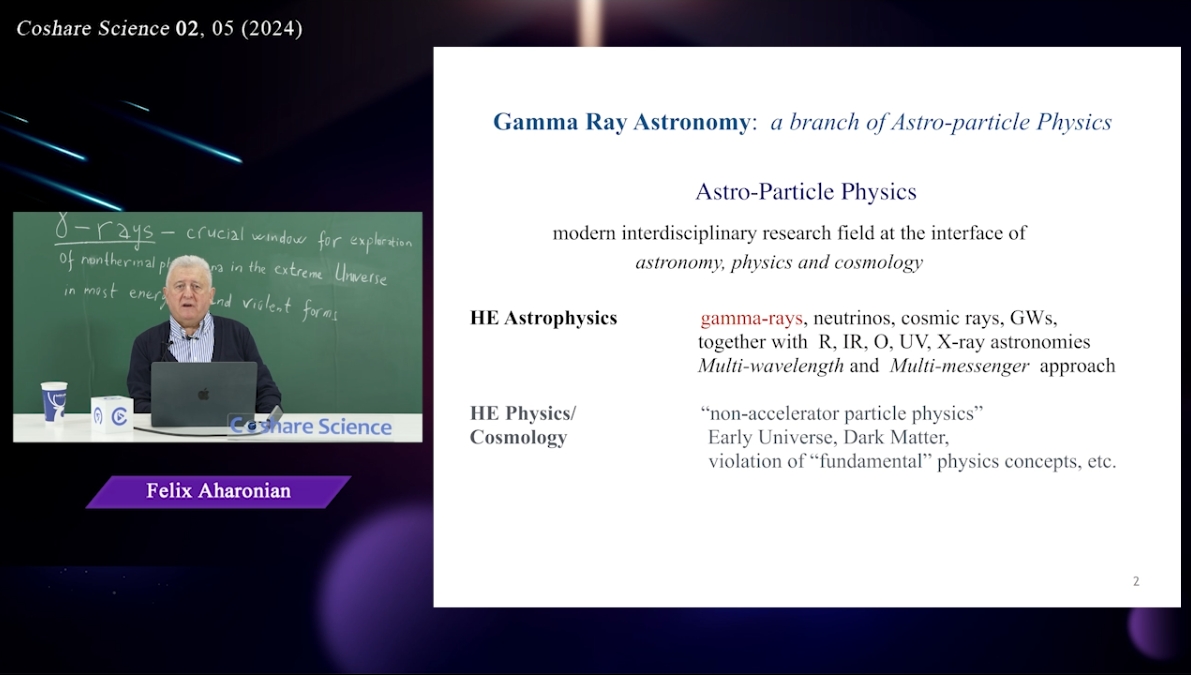
Ground-based gamma-ray astronomy: status and future
In this video article the author covers the history and current status of ground-based gamma-ray astronomy. The recent results in this field have brought important implications to various aspects in astrophysics, such as cosmic ray science and black holes and dark matters, and thus advanced our understanding of the dynamic non-thermal universe. The author also discusses the future prospects in this field, especially the possible imaging air Cherenkov telescopes in GeV energy range.
Angle-resolved photoemission spectroscopy (ARPES): probing electronic structure and many-body interactions
Complex phenomenon in quantum materials is a major theme of physics today. As better controlled model systems, a sophisticated understanding of the universality and diversity of these solids may lead to revelations well beyond themselves. Angle-resolved photoemission spectroscopy (ARPES), formulated after Einstein’s photoelectric effect, has been a key tool to uncover the microscopic processes of the electrons that give rise to the rich physics in these solids. Over the last three decades, the improved resolution and carefully matched experiments have been the keys to turn this technique into a leading experimental probe of electronic structures and many-body effects.
Drawing upon examples spanning from novel superconductors and topological materials to magnetic and one-dimensional materials, we illustrate ARPES's pivotal role in testing ideas, benchmarking theoretical frameworks, uncovering unexpected phenomena, and elucidating the fingerprints of many-body interactions. Moreover, we demonstrate how the integration of modern ultrafast UV lasers and spin polarimetry has empowered photoemission spectroscopy to capture essential microscopic quantities of electrons—energy, momentum, spin, and temporal dynamics—yielding invaluable insights from a wealth of rich and precise information.
Quantum spin liquids and the phases of the cuprates
Soon after the discovery of high temperature superconductivity in the cuprates, Anderson proposed a connection to quantum spin liquids. But observations since then have shown that the low temperature phase diagram is dominated by conventional states, with a competition between superconductivity and charge-ordered states which break translational symmetry. We employ the "pseudogap metal" phase, found at intermediate temperatures and low hole doping, as the parent to the phases found at lower temperatures. We argue that the pseudogap is associated with a spin liquid, and that a particular spin liquid has the needed confining instabilities to resolve a number of open puzzles on the cuprate phase diagram.
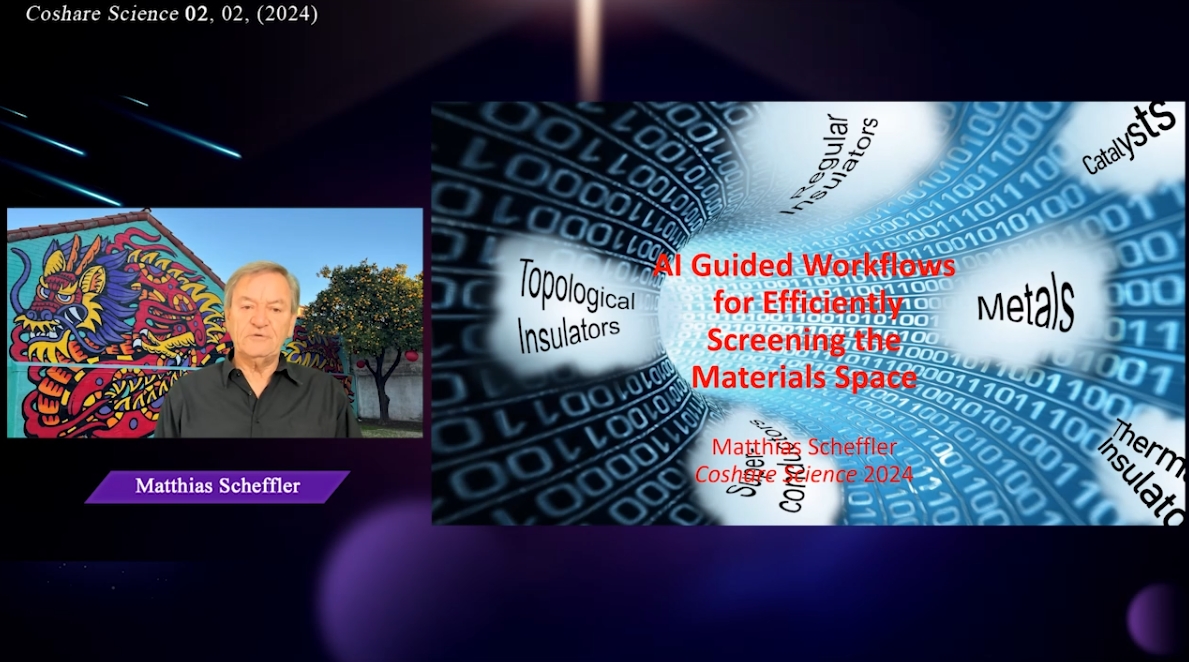
AI guided workflows for efficiently screening the materials space
Artificial intelligence (AI) may capture the properties and functions of materials better than previous theoretical/computational methods because it targets correlations and does not assume a single, specific underlying physical model. Therefore, it addresses the full intricacy of the numerous processes that govern the function of materials. However, the statistical analysis and interpretation of AI models require careful attention.
The review article started with a brief discussion of historical aspects of data-centric science. It then focused on the recently developed, explainable AI methods [8,10] and applications [2,11,12]. The identified "rules" determine the properties and functions of materials. The rules depend on descriptive parameters called "materials genes." As genes in biology, they are correlated with a certain material property or function. Thus, these materials genes help to identify materials that are, for example, better electrical conductors or better heat insulators or better catalysts.