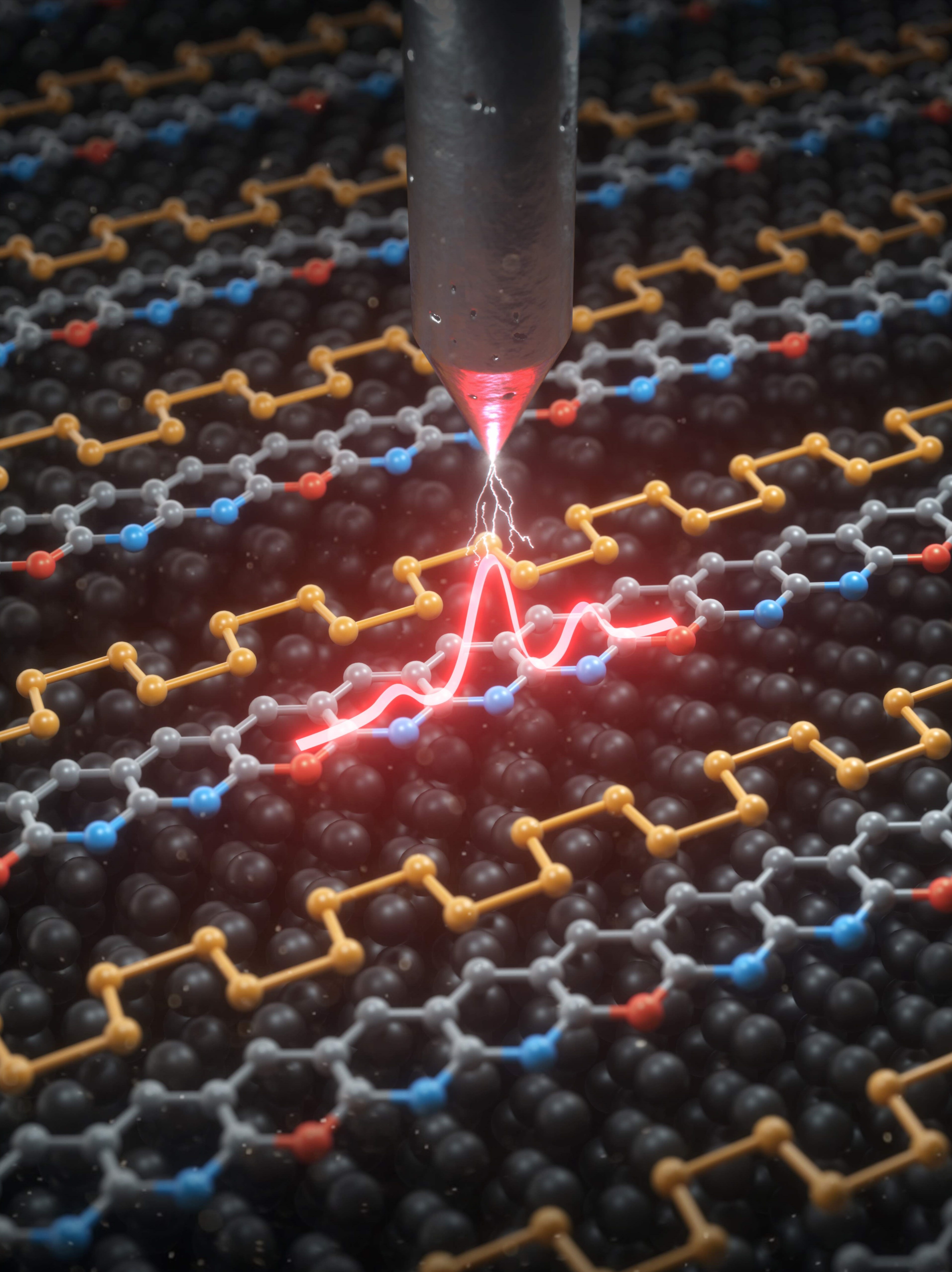
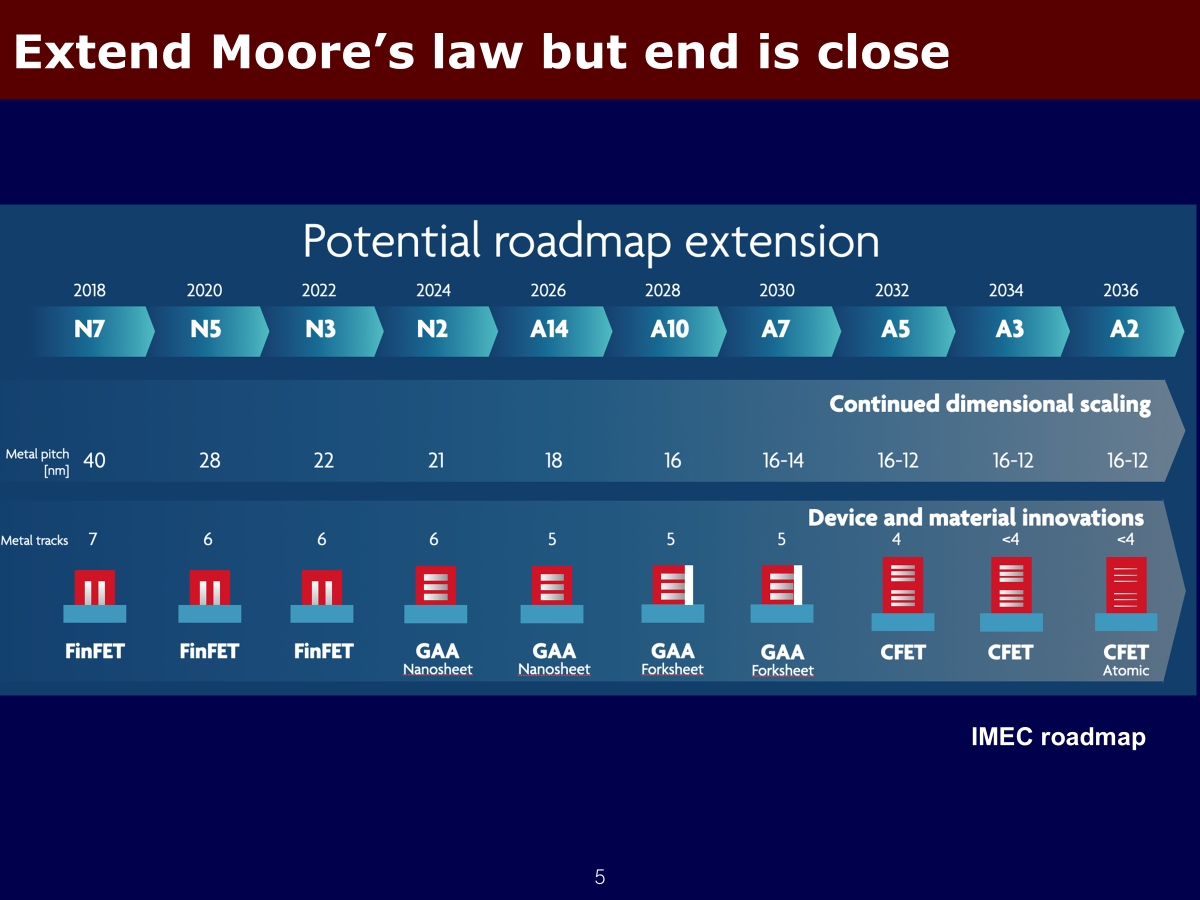
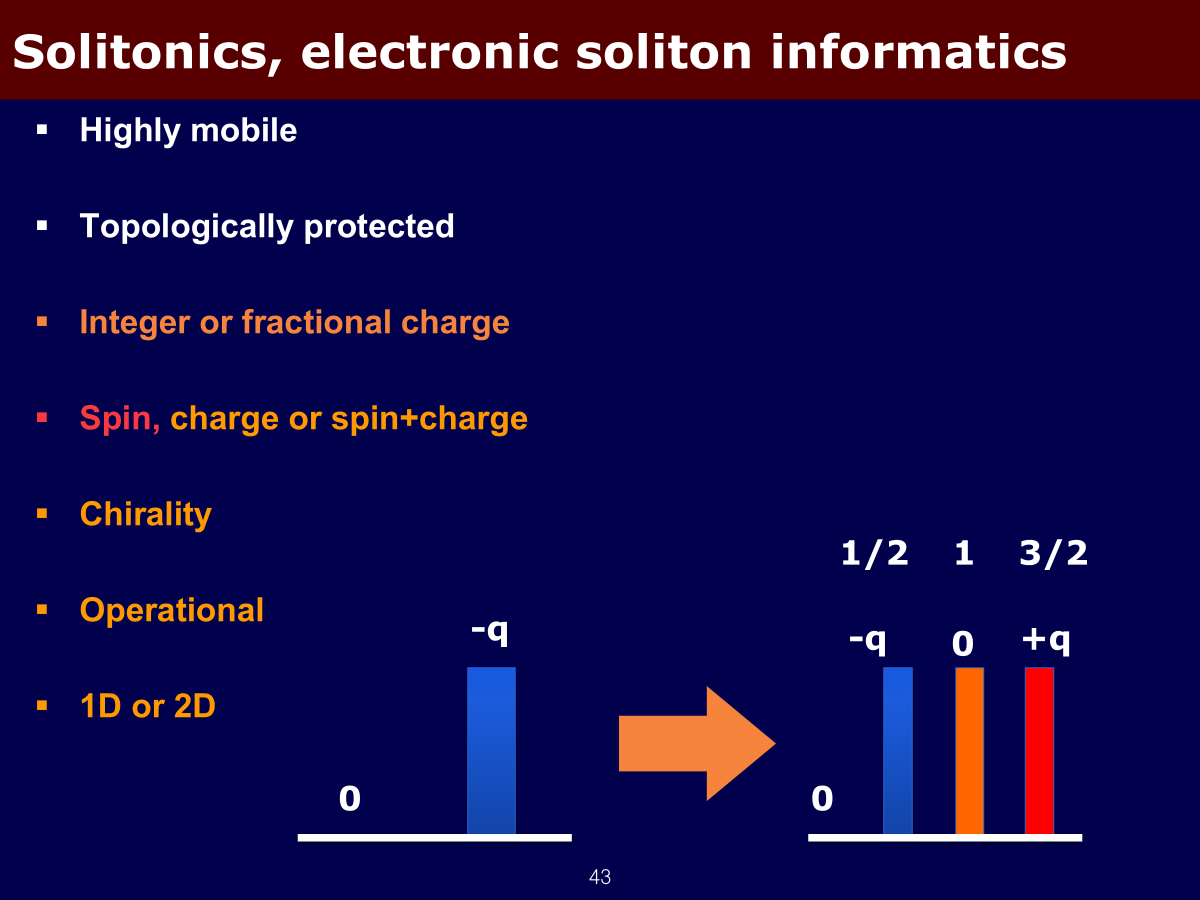
We witness that silicon device technology, the foundation of current information civilization, is close to its end with the limit of device miniaturization and the explosive growth of energy consumption in processing information. While post-Si device architectures such as TMDC devices are under active development, technological and fundamental breakthroughs are required for devices consuming much less energy. From the physics point of view, it is a challenge to find quasi-particles and their device platforms that can carry information at higher density and without energy dissipation. While there are a few candidates such as photons, Cooper pairs, various quantum Hall currents, spin currents, and excitons, we have proposed topological solitons in 1D and 2D materials as one new direction. In 2013–2017, we made it possible to microscopically observe individual topological solitons in 1D materials for the first time since their discovery in 1979. Until 2022, we developed this research to secure model 1D systems for a few different types of microscopically accessible solitons and to track their motions. Our recent work demonstrates the manipulation of solitons and their interactions, which may open a way toward soliton technology in electronic systems. On the other hand, these works open a research field where one can study the structures, electronic states, kinetics, dynamics, and interactions of individual solitons. At the end of the video article, we show that the soliton concepts are helpful in understanding the physics of topological domain walls in complex 2D quantum materials.



This work was supported by Institute for Basic Science of Korea through the Grant IBS-R014-D1. The research presented here are collaborations with Tae Hwan Kim, Sang Mo Cheon, Sung Hoon Lee, Jin Sung Shin, Jae Whan Park, Eui-hwan Do, and Tae Hwan Im.
1. J.W. Park, E. Do, J.S. Shin, S.K. Song, O. Stetsovych, P. Jelinek, and H.W. Yeom, Creation and annihilation of mobile fractional solitons in atomic chains, Nat. Nanotechnol. 17, 244 (2022).
2. S. Cheon, T.-H. Kim, S.-H. Lee, and H.W. Yeom, Chiral solitons in a coupled double Peierls chain, Science 350, 182 (2015).
3. T.-H. Kim, S. Cheon, and H.W. Yeom, Switching chiral solitons for algebraic operation of topological quaternary digits, Nat. Phys. 13, 444 (2017).
4. S. Brazovskii, Solitons and their arrays: from quasi 1D conductors to stripes, J. Supercond. Novel Magn. 20, 489 (2007).
5. M.-F. Shih, P. Leach, M. Segev, M.H. Garrett, G. Salamo, and G.C. Valley, Two-dimensional steady-state photorefractive screening solitons, Opt. Lett. 21, 324 (1996).
6. X. Yi, Q.-F. Yang, K.Y. Yang, and K. Vahala, Imaging soliton dynamics in optical microcavities, Nat. Commun. 9, 3565 (2018).
7. J.H.V. Nguyen, P. Dyke, D. Luo, B.A. Malomed, and R.G. Hulet, Collisions of matter-wave solitons, Nat. Phys. 10, 918 (2014).
8. J.R. Ahn, H.W. Yeom, H.S. Yoon, and I.-W. Lyo, Metal-insulator transition in Au atomic chains on Si with two proximal bands, Phys. Rev. Lett. 91, 196403 (2003).
9. J.R. Ahn, P.G. Kang, K.D. Ryang, and H.W. Yeom, Coexistence of two different peierls distortions within an atomic scale wire: Si(553)-Au, Phys. Rev. Lett. 95, 196402 (2005).
10. H.W. Yeom, S. Takeda, E. Rotenberg, I. Matsuda, K. Horikoshi, J. Schaefer, C.M. Lee, S.D. Kevan, T. Ohta, T. Nagao, and S. Hasegawa, Instability and charge density wave of metallic quantum chains on a silicon surface, Phys. Rev. Lett. 82, 4898 (1999).
11. C. Braun, U. Gerstmann, and W. G. Schmidt, Spin, pairing versus spin chains at Si(553)-Au surfaces, Phys. Rev. B 98, 121402(R) (2018).
12. E. Do, J.W. Park, O. Stetsovych, P. Jelinek, and H.W. Yeom, Z₃ charge density wave of silicon atomic chains on a vicinal silicon surface, ACS Nano 16, 6598 (2022).
13. J.R. Ahn, J.H. Byun, H. Koh, E. Rotenberg, S.D. Kevan, and H.W. Yeom, Mechanism of gap opening in a triple-band Peierls system: In atomic wires on Si, Phys. Rev. Lett. 93, 106401 (2004).
14. C. González, J. Ortega, and F. Flores, Metal–insulator transition in one-dimensional In-chains on Si(111): combination of a soft shear distortion and a double-band Peierls instability, New J. Phys. 7, 100 (2025).
15. S. Wippermann and W.G. Schmidt, Entropy explains metal-insulator transition of the Si(111)-In nanowire array, Phys. Rev. Lett. 105, 126102 (2010).
16. T. Im, J.W. Park, and H.W. Yeom, Manipulating individual topological solitons and bisolitons in an electronic system, Adv. Mater. e10318 (2025).
17. T. Im, S.K. Song, J.W. Park, and H.W. Yeom, Topological soliton molecule in quasi 1D charge density wave, Nat. Commun. 14, 5085 (2023).
18. D. Cho, S. Cheon, K.-S. Kim, S.-H. Lee, Y.-H. Cho, S.-W. Cheong, and H. W. Yeom, Nanoscale manipulation of the Mott insulating state coupled to charge order in 1T-TaS₂, Nat. Commun. 7, 10453 (2016)
19. J. Lee, J.W. Park, G.Y. Cho, and H.W. Yeom, Mobile kink solitons in a van der waals charge-density-wave layer, Adv. Mater. 35, 2300160 (2023).
The author is preparing a supplementary material as a response to the reviewers, which will be published shortly after the publication of the video article.